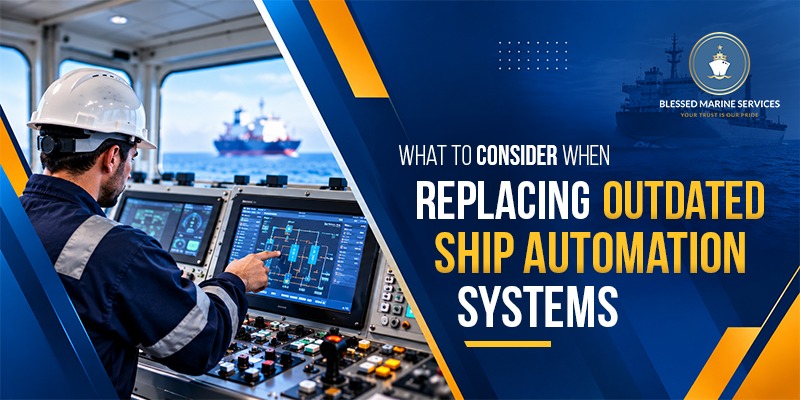
Ship automation systems play an important role in keeping vessels safe, efficient, and reliable. They help monitor machinery, control equipment, manage alarms, and give crew members better visibility into vessel operations. As ships get older, their automation systems can become outdated, difficult to maintain, and expensive to repair.
Professional ship automation services can help shipowners identify outdated components, improve system performance, and determine whether repair, retrofit, or complete replacement is the right solution for their vessel.
Why Replace an Outdated Ship Automation System?
Older automation systems often depend on obsolete PLCs, controllers, HMIs, sensors, and communication components. Over time, spare parts may become difficult to find, while technical support for older systems may also be limited.
Frequent system failures, increasing maintenance costs, outdated software, and difficulty finding replacement components are some common signs that an automation system may need an upgrade.
A modern ship automation system can provide better monitoring, improved reliability, easier troubleshooting, and better integration with other onboard systems.
Check the Existing Automation System First
Before replacing the system, a proper assessment of the existing automation setup is important. Engineers should inspect the current PLCs, control panels, HMIs, sensors, communication networks, alarms, and connected machinery.
This helps identify which components need replacement and which can continue to be used.
For some vessels, a complete replacement may not be necessary. A marine automation retrofit can modernise important parts of the system while keeping suitable existing equipment in operation.
Consider Compatibility With Existing Equipment
One of the biggest challenges during a ship automation upgrade is making sure the new system can communicate with existing machinery.
Ships often have equipment from different manufacturers and different generations. The new automation system must be properly integrated with generators, pumps, compressors, engines, propulsion equipment, alarms, monitoring systems, and other onboard machinery where required.
Proper engineering and system testing can help avoid compatibility issues during installation and commissioning.
Think About Future Requirements
A new automation system should not only solve today’s problems. It should also be capable of supporting the vessel’s future requirements.
Modern marine automation systems can offer improved data monitoring, diagnostics, connectivity, and system integration. Choosing a scalable solution can make it easier to add new monitoring points or equipment in the future without carrying out another major upgrade.
This is particularly useful for shipowners looking to improve vessel efficiency and adopt more digital technologies over time.
Don’t Ignore Cybersecurity
As vessels become more connected, cybersecurity is becoming an important part of marine automation.
When replacing an outdated automation system, shipowners should consider secure network architecture, access controls, software management, backups, and system protection.
A modern automation system should provide reliable control while also helping protect critical vessel systems from potential cyber risks.
Reduce Downtime During Installation
Vessel downtime can be costly, which makes proper planning essential.
Before starting the onboard work, the required equipment, software, drawings, and programming should be prepared as much as possible. Installation and commissioning can then be planned around the vessel’s maintenance schedule or dry-docking period.
Working with an experienced marine automation team can help reduce installation time and minimise disruption to vessel operations.
Choose the Right Marine Automation Partner
Replacing a ship automation system requires more than supplying new equipment. The service provider should have practical experience in marine automation, system integration, installation, troubleshooting, programming, testing, and commissioning.
For vessels operating in the UAE, having access to experienced marine automation engineers can also make it easier to arrange technical support at ports, shipyards, and other marine locations.
A reliable service provider can assess the existing system and recommend whether repair, retrofit, or complete replacement is the most suitable option.
Conclusion
An outdated ship automation system can affect vessel reliability, maintenance costs, and operational efficiency. Replacing it at the right time can help improve system performance and provide a more reliable foundation for future requirements.
Whether a vessel requires a complete automation replacement, PLC upgrade, HMI replacement, automation retrofit, or commissioning support, proper assessment and planning are essential.
For shipowners and operators looking for marine automation services in the UAE, Blessed Marine Services provides support for ship automation, marine electrical and control systems, installation, repair, upgrades, and commissioning.
Frequently Asked Questions
When should a ship automation system be replaced?
A ship automation system should be considered for replacement when it has frequent failures, obsolete components, limited spare-part availability, outdated software, or increasing maintenance costs.
Can an old ship automation system be upgraded?
Yes. Depending on the condition of the existing system, a marine automation retrofit can replace outdated PLCs, HMIs, controllers, or communication components while keeping suitable existing equipment.
Why is ship automation important?
Ship automation helps monitor and control important vessel equipment, manage alarms, improve operational visibility, and support safer and more efficient vessel operations.
How do I choose a marine automation company in the UAE?
Look for a company with marine automation experience, qualified engineers, system integration capabilities, installation and commissioning expertise, and the ability to provide technical support for vessels operating in the UAE.
Does automation replacement require commissioning?
Yes. Testing and commissioning are important to confirm that the new automation system, alarms, controls, communication interfaces, and connected equipment are working correctly before the vessel returns to normal operation.